

Asian arowana urgent help
- Thread starter Miks786
- Start date
You are using an out of date browser. It may not display this or other websites correctly.
You should upgrade or use an alternative browser.
You should upgrade or use an alternative browser.

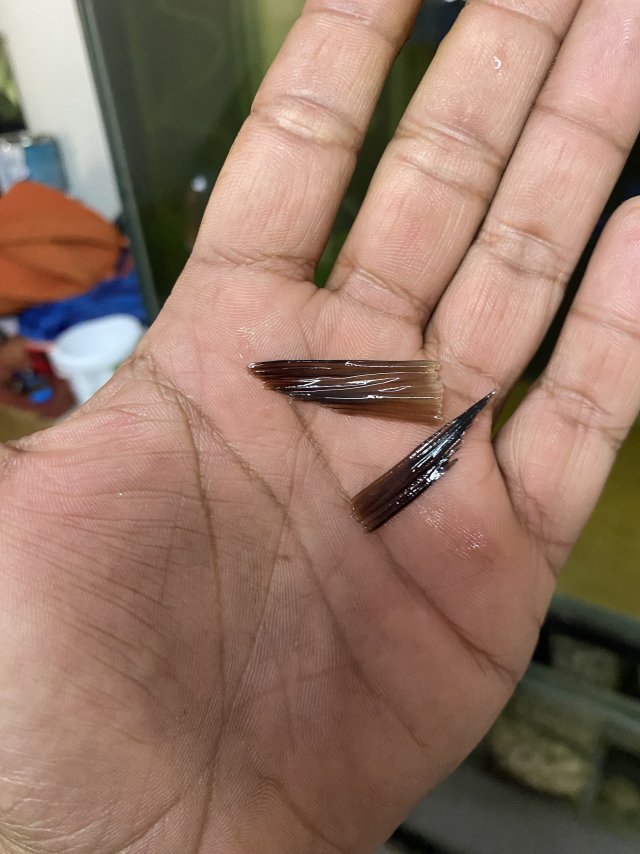
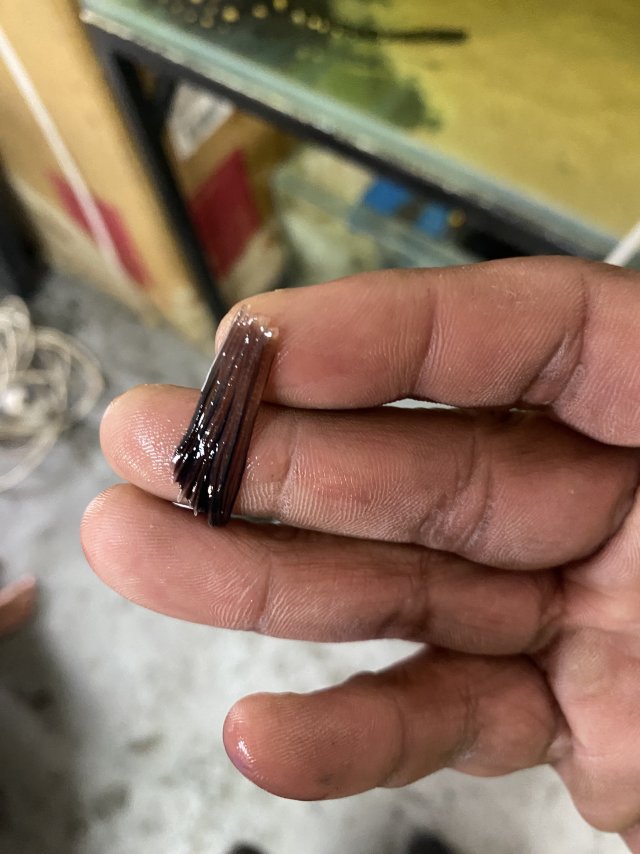
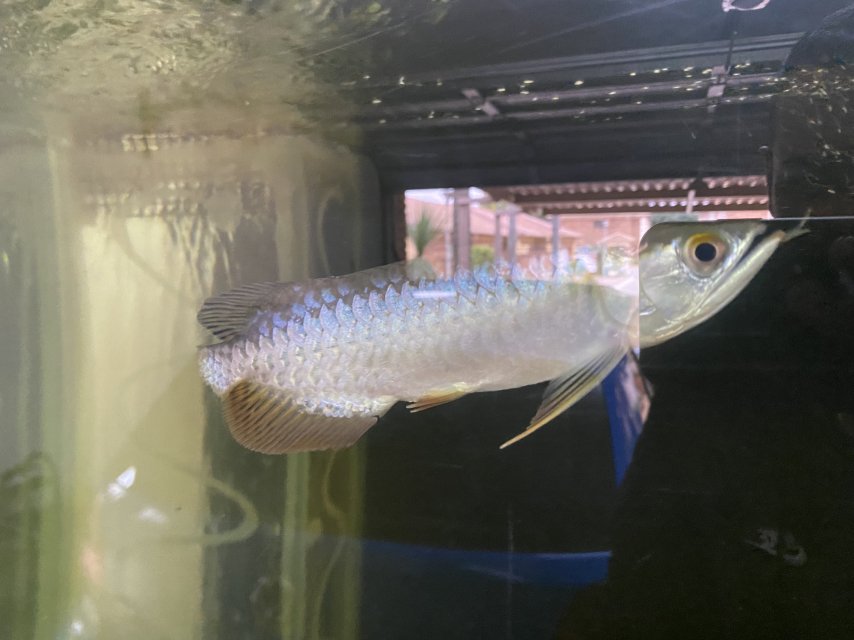
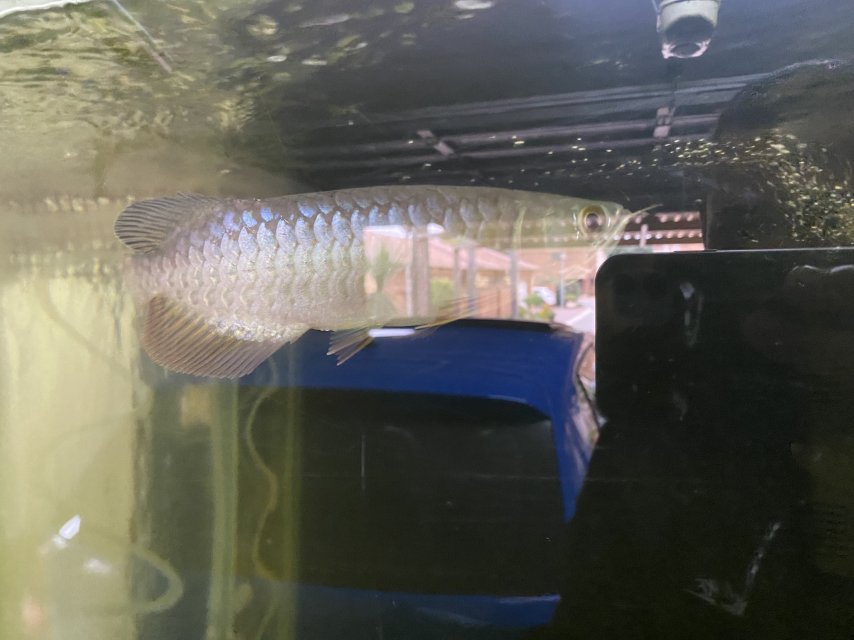
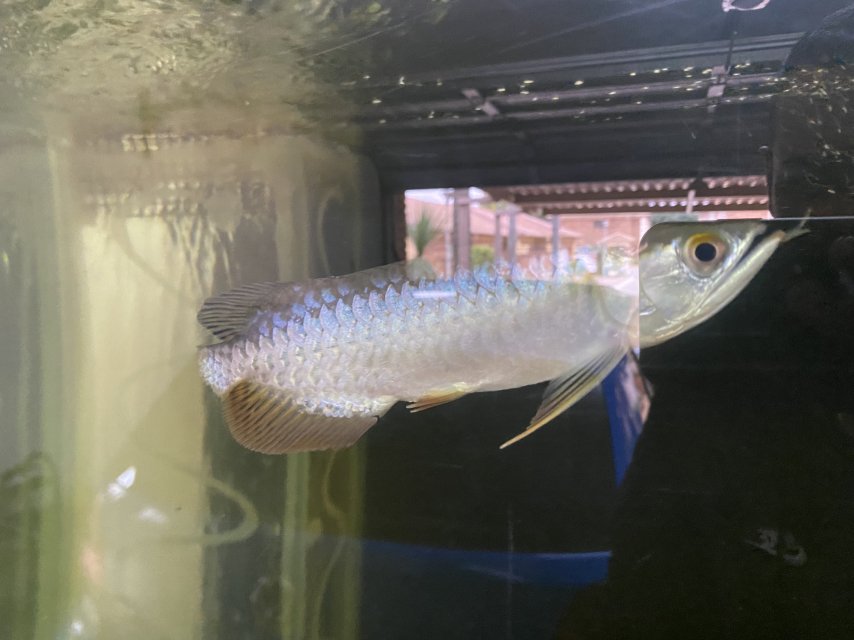
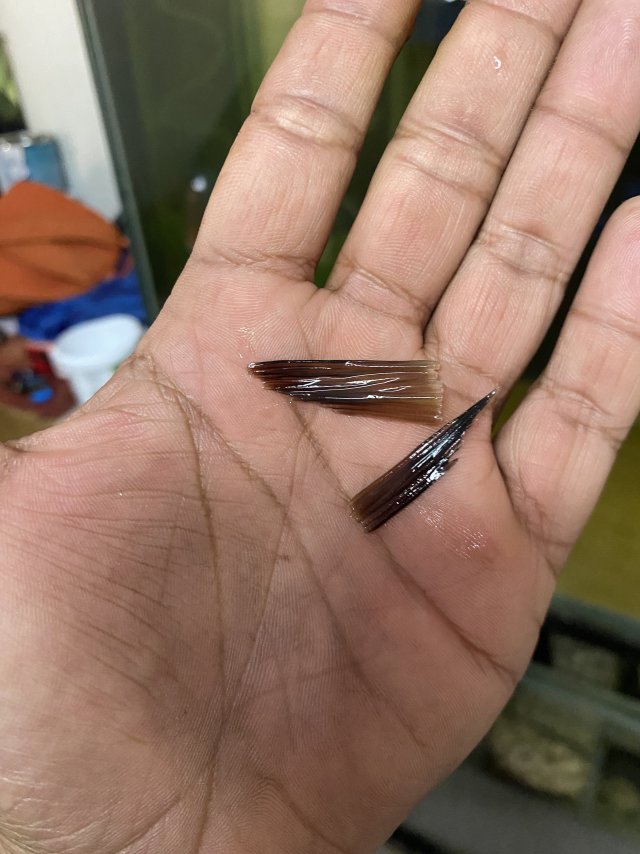


That is very close to the caudal peduncle. Sorry to say only time will tell if it will grow back.
The peduncle itself looks healthy so it looks like the damage may have happened when netting the fish.
Did you take clear pics of it in the transit bag before opening the bag?
I’d be asking the supplier what their policy is for this situation. I can’t imagine the DOA policy fits but for an expensive species like an AA I would want a refund or replacement if the tail doesn’t grow back
The peduncle itself looks healthy so it looks like the damage may have happened when netting the fish.
Did you take clear pics of it in the transit bag before opening the bag?
I’d be asking the supplier what their policy is for this situation. I can’t imagine the DOA policy fits but for an expensive species like an AA I would want a refund or replacement if the tail doesn’t grow back

I’m not sure which country you live in, but given the price of asian arowana and the fact that the tail of a healthy fish does not just completely fall off, I would reconnect with the seller and contest their decision. There’s never nothing they can do, it’s a choice of theirs to do nothing.
If you continue to get no satisfaction, I would file a complaint with your credit card company. It would be like receiving the defective electronic device. Your credit company can retractthe payment.
The fish does appear to be healthy otherwise it should survive. It may benefit from having betadine dabbed on the caudal peduncle to prevent infection. Keep it in super clean water. I would also add 1 tablespoon of salt for 5 gallons to reduce any bacteria load in the water column.
Keep us posted.
If you continue to get no satisfaction, I would file a complaint with your credit card company. It would be like receiving the defective electronic device. Your credit company can retractthe payment.
The fish does appear to be healthy otherwise it should survive. It may benefit from having betadine dabbed on the caudal peduncle to prevent infection. Keep it in super clean water. I would also add 1 tablespoon of salt for 5 gallons to reduce any bacteria load in the water column.
Keep us posted.
I agree with everything you say above, but as a transshipper, I would be reluctant to offer a full refund in a situation like this. In particular, the absence of photographs is an issue. Assuming the purchaser let the transhipper know immediately then there might be room for negotiation. Usually it would be the farm that would provide the replacement and not the transshipper. Also, usually the buyer would pay for the shipping cost of a replacement fish (assuming one is provided). I have imported and transhipped over several thousand Asian arowana to Canada and I have never had a fish lose its entire tail like this.I’m not sure which country you live in, but given the price of asian arowana and the fact that the tail of a healthy fish does not just completely fall off, I would reconnect with the seller and contest their decision. There’s never nothing they can do, it’s a choice of theirs to do nothing.
If you continue to get no satisfaction, I would file a complaint with your credit card company. It would be like receiving the defective electronic device. Your credit company can retractthe payment.
The fish does appear to be healthy otherwise it should survive. It may benefit from having betadine dabbed on the caudal peduncle to prevent infection. Keep it in super clean water. I would also add 1 tablespoon of salt for 5 gallons to reduce any bacteria load in the water column.
Keep us posted.

I'm curious as to why the farm/breeder would be expected bear the brunt of dealing with the customer and resolving this issue, unless the buy dealt with them directly.
Did the farm deliver a tailless arowana, complete with the severed/shed tail in the bag, to the transshipper who then sent it to the end consumer? Does the transshipper not actually see the fish before sending them on? Are they re-bagged by the transshipper, after being in a temporary holding tank for a period of time? Or is this a case of a bag containing a fish being sent to the transshipper, who immediately and without checking it forwards it to the buyer? That sounds wonky.
If the fish was shipped by the breeder with its entire tailfin included in the bag but not attached to the fish , that would seem to be a problem to be resolved between the breeder and the transshipper.
If the fish was re-bagged by the transshipper and had the tail mysteriously fall off in transit to the buyer, surely the onus is on the transshipper to make things right. Why should the buyer be expected to deal with the breeder in that case?
I admit that taking pictures of the fish in the sealed bag, with its tail merrily floating around detached from it, would have been the prudent thing to do. And I don't know exactly how this whole "transshipper" thing works. Who does the customer pay? Who is he buying the fish from?
I've purchased items...not living creatures...in stores that were immediately found to be broken or faulty when received; in a couple of cases the retailer essentially told me I had to deal with the manufacturer. I refused to accept this, contested it, and eventually got my money back. The retailer earned a place on my Do Not Buy list.
One large Canadian retailer of sporting goods goes so far as to present the buyer of a new firearm with a declaration stating that the buyer is expected to sign. It essentially states that the retailer washes his hands of any problems that may exist with the firearm, and that the buyer must deal strictly with the manufacturer or importer. I don't know if this is even legal and don't care since I won't buy from them. But certainly many retailers like to "try the customer on" by telling them they can't help...when in reality, as
danotaylor
stated above, they just don't want to help.
Maybe using the term "transshipper" is another such end-run around a retailer's legal and moral responsibility? I hope we hear more about this issue. OP, it sounds suspiciously as though you are being screwed...and that there will be disagreement and finger-pointing about who holds the screwdriver.
Did the farm deliver a tailless arowana, complete with the severed/shed tail in the bag, to the transshipper who then sent it to the end consumer? Does the transshipper not actually see the fish before sending them on? Are they re-bagged by the transshipper, after being in a temporary holding tank for a period of time? Or is this a case of a bag containing a fish being sent to the transshipper, who immediately and without checking it forwards it to the buyer? That sounds wonky.
If the fish was shipped by the breeder with its entire tailfin included in the bag but not attached to the fish
, that would seem to be a problem to be resolved between the breeder and the transshipper.If the fish was re-bagged by the transshipper and had the tail mysteriously fall off in transit to the buyer, surely the onus is on the transshipper to make things right. Why should the buyer be expected to deal with the breeder in that case?
I admit that taking pictures of the fish in the sealed bag, with its tail merrily floating around detached from it, would have been the prudent thing to do. And I don't know exactly how this whole "transshipper" thing works. Who does the customer pay? Who is he buying the fish from?
I've purchased items...not living creatures...in stores that were immediately found to be broken or faulty when received; in a couple of cases the retailer essentially told me I had to deal with the manufacturer. I refused to accept this, contested it, and eventually got my money back. The retailer earned a place on my Do Not Buy list.
One large Canadian retailer of sporting goods goes so far as to present the buyer of a new firearm with a declaration stating that the buyer is expected to sign. It essentially states that the retailer washes his hands of any problems that may exist with the firearm, and that the buyer must deal strictly with the manufacturer or importer. I don't know if this is even legal and don't care since I won't buy from them. But certainly many retailers like to "try the customer on" by telling them they can't help...when in reality, as
danotaylor
stated above, they just don't want to help.Maybe using the term "transshipper" is another such end-run around a retailer's legal and moral responsibility? I hope we hear more about this issue. OP, it sounds suspiciously as though you are being screwed...and that there will be disagreement and finger-pointing about who holds the screwdriver.
In the the most common form of transshipping the transshipper never opens the shipping bag, and often not even the box. The Transshipper literally picks up the box from the international airline (clears customs, etc.) and then "transships" the fish using another airline (regional or national). In this context you can see the transshipper is literally just a middleman/broker who really has nothing to do with the fish. Of course there are issues related to gross negligence - leaving fish in a cold area while transhipping, not adding heat packs when needed, not inspecting a wet box to find out why it is wet, etc. But overall, the transshipper in the context I have described has zero physical contact with the fish and so can not be held responsible for their condition on arrival. It is the farm that takes on the responsibilty. This holds true for commercial/wholesale transshippng as well. I know this as I have recently expanded my operation to become a true wholesale transhipper of general freshwater tropical fish. I have learned what the norms of the industry are and I follow them. Returning to Asian arowana transshipping, I always like to have a contract in place with my customers that spells out the responsibility and liability issues. Finally, in my experience a trusted transshipper and farm will do its best to solve a problem like the one described by the OP according to the norms of the aquarium "industry". If the fish arrives in distress and dies, the farm replaces the fish while the customer pays the shipping cost for the replacement fish. That's the norm. But that "norm" usually requires immediate notification of an issue with a fish, along with photos/video. This all needs to be clearly explained to the customer prior to the arrival of the fish. If it was not, then the matter gets more complicated.I'm curious as to why the farm/breeder would be expected bear the brunt of dealing with the customer and resolving this issue, unless the buy dealt with them directly.
Did the farm deliver a tailless arowana, complete with the severed/shed tail in the bag, to the transshipper who then sent it to the end consumer? Does the transshipper not actually see the fish before sending them on? Are they re-bagged by the transshipper, after being in a temporary holding tank for a period of time? Or is this a case of a bag containing a fish being sent to the transshipper, who immediately and without checking it forwards it to the buyer? That sounds wonky.
If the fish was shipped by the breeder with its entire tailfin included in the bag but not attached to the fish
If the fish was re-bagged by the transshipper and had the tail mysteriously fall off in transit to the buyer, surely the onus is on the transshipper to make things right. Why should the buyer be expected to deal with the breeder in that case?
I admit that taking pictures of the fish in the sealed bag, with its tail merrily floating around detached from it, would have been the prudent thing to do. And I don't know exactly how this whole "transshipper" thing works. Who does the customer pay? Who is he buying the fish from?
I've purchased items...not living creatures...in stores that were immediately found to be broken or faulty when received; in a couple of cases the retailer essentially told me I had to deal with the manufacturer. I refused to accept this, contested it, and eventually got my money back. The retailer earned a place on my Do Not Buy list.
One large Canadian retailer of sporting goods goes so far as to present the buyer of a new firearm with a declaration stating that the buyer is expected to sign. It essentially states that the retailer washes his hands of any problems that may exist with the firearm, and that the buyer must deal strictly with the manufacturer or importer. I don't know if this is even legal and don't care since I won't buy from them. But certainly many retailers like to "try the customer on" by telling them they can't help...when in reality, as
Maybe using the term "transshipper" is another such end-run around a retailer's legal and moral responsibility? I hope we hear more about this issue. OP, it sounds suspiciously as though you are being screwed...and that there will be disagreement and finger-pointing about who holds the screwdriver.
And if the transshipper actually held the arowana for a period of time in their own tank before transshipping, then the matter is completely different. In this context the the transshipper has assumed responsibility for guaranteeing the health of the fish. In this different context, it is now the transshipper's responsibility to make good on the replacement of the fish, and not the farm. Finally, in this latter context, the price charged by the transshipper will likely be higher because they are taking on the added risk/liability.
I hope the information above is helpful.
Last edited:
Very helpful, yes, thank you. I suppose that having someone who knows the ropes to receive the package at the airport and get it cleared through customs, etc. likely can result in less time in the bag for the fish at the end of the day. I had visions of a middleman who opened all the bags and transferred the fish to holding tanks where they remained just long enough to de-stress...before being repackaged and re-stressed and then shipped out again.
It sounds as though there is a pretty well-oiled mechanism working to get the fish into the country legally and into the aquarist's home as quickly as possible. It's really too bad about the pictures in this case; I hope things go well for the OP.
It sounds as though there is a pretty well-oiled mechanism working to get the fish into the country legally and into the aquarist's home as quickly as possible. It's really too bad about the pictures in this case; I hope things go well for the OP.
S
stratos
i understand what you are saying in theory, but to say the transshipper has nothing to do with the product or supplier they are profiting from is a smoke screen. The buyers are essentially relating to you and trusting you & your source. By profiting from the sale, transhippers inherit responsibility for the product also, and therefore should work with disgruntled customers to make things right.
As
jjohnwm
said, this incident, without pictures is complicated, but it seems by what you are saying, even if pictures were supplied it would wind up in a finger pointing he said she said debacle where no one would want to take responsibility, and the loser, as always, is the end consumer.
I guess a buyer beware warning is the take away from this situation. I know of at least one transshipped in the US that fakes info & pics of facilities and fish that are not even his, and the buyers would be none the wiser that he is nothing more than a middle man that bears no responsibility for son that turn up and are nothing like the “pictures”.
Nothing against you personally, you have been open & transparent about the process, but it can be a shady side business to get caught up in.
As
jjohnwm
said, this incident, without pictures is complicated, but it seems by what you are saying, even if pictures were supplied it would wind up in a finger pointing he said she said debacle where no one would want to take responsibility, and the loser, as always, is the end consumer.I guess a buyer beware warning is the take away from this situation. I know of at least one transshipped in the US that fakes info & pics of facilities and fish that are not even his, and the buyers would be none the wiser that he is nothing more than a middle man that bears no responsibility for son that turn up and are nothing like the “pictures”.
Nothing against you personally, you have been open & transparent about the process, but it can be a shady side business to get caught up in.
Again I agree with all you say, except for the "photo aspect." If a photo and/or video were supplied immediately on arrival of the fish, then the case becomes open and shut and the farm replaces the fish (while the customer pays the shipping). Again that arrangement should be made clear prior to the ordering of the fish, and if the customer does not like it then they should be willing to pay more either at a local store (where they can get the fish in person) or else have the transhipper hold the fish for a period of time for them (and then sold at a higher price). I know Asian aro farms that have been cheated by customers and so demand a video be made of a chip read of the dead fish' body. Real time video calls are also hugely useful. In the end though, it comes down to the trustworthiness of the farm, the transhipper, and the customer. Theoretically a customer could have had a mishap with their fish shortly after its arrival and then claim that "it came this way." There is no easy way to really resolve this situation if it is not recorded and/or video called immediately. And a PRESALE CONTRACT that is well understood by all the parties needs to be in placeS stratos i understand what you are saying in theory, but to say the transshipper has nothing to do with the product or supplier they are profiting from is a smoke screen. The buyers are essentially relating to you and trusting you & your source. By profiting from the sale, transhippers inherit responsibility for the product also, and therefore should work with disgruntled customers to make things right.
As
I guess a buyer beware warning is the take away from this situation. I know of at least one transshipped in the US that fakes info & pics of facilities and fish that are not even his, and the buyers would be none the wiser that he is nothing more than a middle man that bears no responsibility for son that turn up and are nothing like the “pictures”.
Nothing against you personally, you have been open & transparent about the process, but it can be a shady side business to get caught up in.
I only deal with farms I have visited in person. I am friends with the owner of the main farm I deal with; he has spent time living in my house in Vancouver and before that I spent time with him in Singapore. Many of my customers have gone on to visit him too. I have one customer planning a visit to the farm in Sabah, Malaysia in a few months time. So speaking for myself, there is a lot of trust between me and the farm and we always work hard to make sure a customer is satisfied. If a fish is injured or dies shortly after landing, we provide a replacement. Depending on the context we may or may not even charge the shipping cost. That is where the full context comes in. Many of my customers are repeat buyers, and many of my customers have become my friends. It's a fun little hobby here in Canada and I do my best to support it
As for a dishonest importer/transhipper who uses faked photos to sell fish, I don't think they will last long in the trade. I have now been importing for over 20 years and have seen countless importers come and go. Private FB groups and other social media weeds out dishonesty pretty fast I think.
Without knowing the full context of the OP incident we can't do more than generalize about the case, and really can not determine how to apportion responsibility.
Last edited: