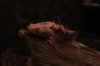
Marble Goby (Soon Hock) - Oxyeleotris Marmorata
Physical characteristics: Marble sleepers are the largest gobies, reaching a length of about 35 inches (90 centimeters). These gobies have a streamlined body, a flat head, two dorsal fins, and a rounded tail fin. The body is brown with dark blotches.
Geographic range: Marble sleepers live in Southeast Asia. They have been introduced into Taiwan for fish farming.
Habitat: Marble sleepers live in rivers, lakes, swamps, ditches, and ponds over muddy, sandy, or gravel bottoms. These fish also may be found in water with a low salt content around the mouths of rivers and canals.
Diet: Marble sleepers eat small fishes and invertebrates.
Behavior and reproduction: Marble sleepers live alone and are active at night, prowling slow-moving streams, lakes, and swamps. During the day these fish rest at the bottom, taking cover among rocks and plants. Marble sleepers are able to reproduce when they are about 4 inches (10 centimeters) long. The males care for the eggs and guard the newly hatched young. The larvae drift freely at first but become bottom dwellers about twenty-five to thirty days after hatching.
Marble sleepers and people: Marble sleeper is a highly prized food fish in Southeast Asia, where it is also raised in ponds.
Conservation status: Marble sleepers are not threatened or endangered.