Pre-Drilled aquarium ?

  • We are currently upgrading MFK. thanks! -neo

ZachLL

Feeder Fish
MFK Member
Jun 10, 2015
39
16
8
41
North Carolina
Hey guys,
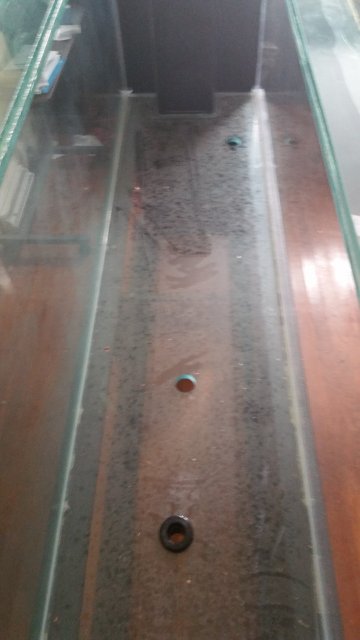
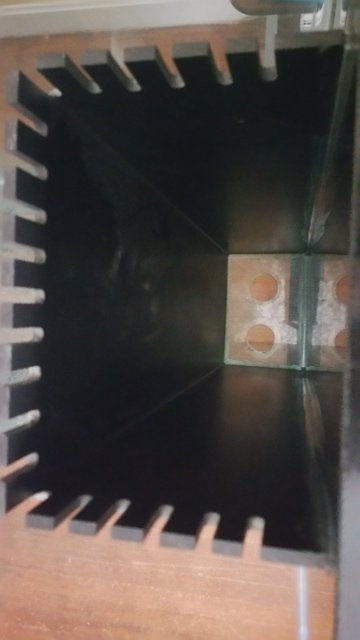
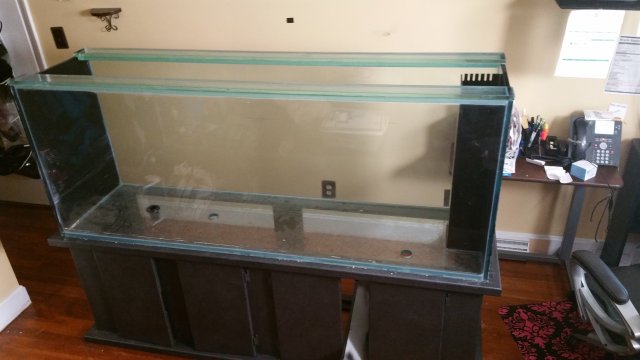
I recently purchased a 150g pre-drilled glass tank off craigslist for pretty cheap. I have never owned a drilled aquarium nor set up a sump system previously. I've been researching setups online and haven't seen one with the amount of drilled holes mine has. Mine has 5 holes total.....2 at the bottom of the overflow and 3 along the bottom of the tank....each measure 1.5" in diameter. I will attach a few pics. It has no branding on the glass or anywhere along the aquarium.... I am going to be using it as a freshwater flowerhorn tank. Any advice on what setup this drilling method this was intended for? Any tips advice would be GREATLY appreciated! Thanks! 20151013_171557.jpg 20151013_171612.jpg 20151013_171546.jpg 20151013_171557.jpg 20151013_171612.jpg 20151013_171546.jpg
 
Most likely this was a reef tank at some point with the returns on the bottom flowing through the rockwork.
If the holes won't be used you can cap the bulkheads, remove them and silicone glass over them or use them for the returns either with a sump or canister. If you decide to go sump and you use the returns, you will most definitely need checkvalves on the return lines. A canister is a closed loop so you could use the returns but you will have to camafloug them with rock work or decorations.
What you have seems pretty great. I don't know what you payed, but that tank has some real nice potential.
The overflow could also be used with a canister or two...just put the pick-ups in the bottom of the overflow. The only problem there is the removal of debris off the bottom of the tank won't be very good, but that's the way it goes in a tank design like that.
 
  • Like
Reactions: ZachLL
Most likely this was a reef tank at some point with the returns on the bottom flowing through the rockwork.
If the holes won't be used you can cap the bulkheads, remove them and silicone glass over them or use them for the returns either with a sump or canister. If you decide to go sump and you use the returns, you will most definitely need checkvalves on the return lines. A canister is a closed loop so you could use the returns but you will have to camafloug them with rock work or decorations.
What you have seems pretty great. I don't know what you payed, but that tank has some real nice potential.
The overflow could also be used with a canister or two...just put the pick-ups in the bottom of the overflow. The only problem there is the removal of debris off the bottom of the tank won't be very good, but that's the way it goes in a tank design like that.

Thanks for your reply! I paid $160 for it and it has never been used, it was made to go into a wall and the person decided not to go thru with it...so they sold it pretty cheap. It is VERY heavy thick glass, and was intended to be used as a saltwater/reef. One negative is it has a sloppy silicone job that is kinda unsightly since there is no framing on the top or bottom edges. I am looking into getting a large wet/dry sump from my local fish store intended for a 300-400 gal tank. I also have a fluval FX6 canister filter already. Do you think I can somehow attach the intake and outtake of the fluval to the extra holes in the bottom without substrate getting in them? Any design/ideas you would suggest? Thanks again!
 
  • Like
Reactions: boldtogether
You got a great deal my friend.
So you have an FX6...simply utilize the overflow and plumb the intake to the Fluval using one of the holes...this way, no worry of sand in the filter because its behind the overflow out of sight....since you have two holes, why not get a second filter...doesnt have to be big...maybe run a UV sterilizer in line with it....?
Just a thought.
The returns are another issue but not a bad issue. You could split the return from the FX6 and use two on the bottom bulkheads. I don't remember the tubing size of the FX6...1/2"?...anyway, get the same sized Loc-line moveable nozzles and then stack rocks and decor around them to hide them....I would aim at least one up toward the surface. If you add an addition filter,( I would absolutely) then just use a single return per hole....or split the two more 8n the middle for the FX6 and the one toward the side a little use for the second filter return.
You have a lot of options and an amazing tank for $160...
 
  • Like
Reactions: ZachLL
Since the tank was originally intended for reef, the holes in the tank may of also been used for a "closed loop circulation" to increase the flow of water for corals. This is similar to using powerheads, but some people add that in addition to, or instead of powerheads/wave makers.

I am a bit curious why they put the holes where they did. Anyway, the way it essentially works is you would use a water pump (like any sump return pump) to suction water in through the inlet (having a strainer inside the tank to reduce large debris), then blow water out using loc-line(s). The water being sucked in and returning to the tank creates additional flow of water that you wouldn't otherwise have. The water never is introduced to a sump, etc., hence "closed loop".

I have FW, but opted for the holes on my tank for closed loop circulation (as it was getting drilled for internal overflow). It definitely adds circulation to my tank without the use of powerheads. HTH.
 
  • Like
Reactions: ZachLL
Since the tank was originally intended for reef, the holes in the tank may of also been used for a "closed loop circulation" to increase the flow of water for corals. This is similar to using powerheads, but some people add that in addition to, or instead of powerheads/wave makers.

I am a bit curious why they put the holes where they did. Anyway, the way it essentially works is you would use a water pump (like any sump return pump) to suction water in through the inlet (having a strainer inside the tank to reduce large debris), then blow water out using loc-line(s). The water being sucked in and returning to the tank creates additional flow of water that you wouldn't otherwise have. The water never is introduced to a sump, etc., hence "closed loop".

I have FW, but opted for the holes on my tank for closed loop circulation (as it was getting drilled for internal overflow). It definitely adds circulation to my tank without the use of powerheads. HTH.

Thanks! So if I wanted to use the closed loop system, would I need the pvc or lockline piping running up a certain distance into the tank ? Or could I maybe hide a shorter intake/return in those holes and hide them to keep the esthetics nice. I like the idea of having the circulation and not having to have a wave maker in the tank
 
Last edited:
  • Like
Reactions: boldtogether
Thanks! So if I wanted to use the closed loop system, would I need the pvc or lockline piping running up a certain distance into the tank ? Or could I maybe hide a shorter intake/return in those holes and hide them to keep the esthetics nice. I like the idea of having the circulation and not having to have a wave maker in the tank

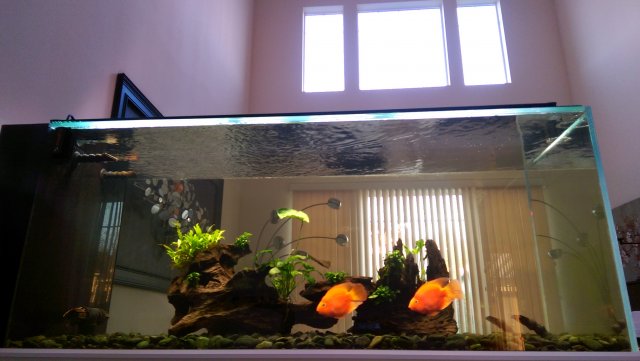
I used PVC to plumb the drains going to and from the water pump. both suction and return are connected to the bulkheads. The PVC adaptor w/strainer and loc-lines are all you see inside the tank. This doesn't bother me at all, but if don't like the look you can design around it.

This is not uncommon for reef tanks and most use sand - with no issues. That's the purpose of the strainer, anything bigger will not get sucked in. I use pebbles as substrait, so not an issue either.

This is just my example; Suction on the left end and returns on the right. You can make shorter loc-lines with smaller nozzles if you prefer. For your tank, you could use the hole towards the overflow for the suction end, and other two for returns/loc-line. If you decide to go for it, let me know if you have plumbing questions - it's not any more complicated than plumbing for drain and return from sump.

WP_20151003_018.jpg
 
  • Like
Reactions: ZachLL
I used PVC to plumb the drains going to and from the water pump. both suction and return are connected to the bulkheads. The PVC adaptor w/strainer and loc-lines are all you see inside the tank. This doesn't bother me at all, but if don't like the look you can design around it.

This is not uncommon for reef tanks and most use sand - with no issues. That's the purpose of the strainer, anything bigger will not get sucked in. I use pebbles as substrait, so not an issue either.

This is just my example; Suction on the left end and returns on the right. You can make shorter loc-lines with smaller nozzles if you prefer. For your tank, you could use the hole towards the overflow for the suction end, and other two for returns/loc-line. If you decide to go for it, let me know if you have plumbing questions - it's not any more complicated than plumbing for drain and return from sump.

View attachment 1145114

Beautiful Tank! Thanks for the picture! I can definetly get some ideas going based on that!
 
MonsterFishKeepers.com