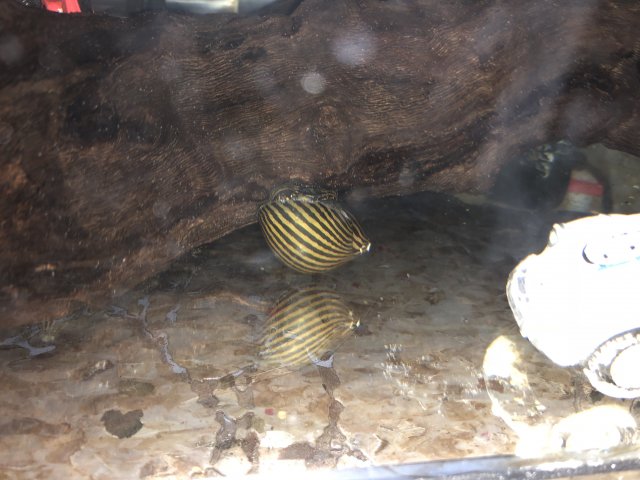
Mystery snails will eat plenty of algae, but due to their potential size carry with them a potentially enormous bio-load. Some species will also eat healthy plants. Best viewed as a pet snail really. They look great though.
Nerite snails as mentioned are great little algae eating machines. The black racer nerite snail is particularly effective I find.
Ramshorn snails is another great option, especially for soft-water tanks or low-oxygen tanks. Their blood is also, unusually for molluscs, iron based, and so will tolerate copper-based medications and fertilizers.
Pond snails is another commonly seen snail, but they reproduce asexually and quickly, and I find they will more readily eat healthy soft plants (effective teeth), and so they might best be avoided.
Snail population booms are, like heavy algae growth, usually a sign of underlying problems such as overfeeding. Simply feed less and the problem goes away. An easy way to remove excess snails is to simply unplug the filter and wait, as the snails will scurry(slowly) to the top as soon as the oxygen levels drop, or water goes bad. This is also a great early warning system.
If you're still worried about a population outbreak, adding an assassin snail to the tank will help keep the little bastards in check. It's also surprisingly exciting to watch them hunt.
Malaysian trumpet snails and other sand snails are usually great algae eaters, but stay close to the substrate, and don't often climb the walls or decorations. Their true value lies in their effectiveness at cleaning and airating the substrate. I consider sand snails a must for any tank with sand. I really haven't vacuumed since I started keeping mts and thiara populations in my tanks.
While most species of freshwater snail will eat algae, they will eat pretty much anything that contains energy at all, like dead plant matter and even some types of waste. Keep in mind that snails add to the bio-load and oxygen consumption rates in the tank. All in all, snails are great clean-up crews in general.
Another great option for algae control would be certain species of fresh-water shrimp.